Children’s Vision in Development – How the Need for Glasses Changes with Age

Children’s Vision in Development – How the Need for Glasses Changes with Age
A child’s vision develops rapidly from birth through the teenage years. In the beginning, the world appears blurry and full of contrasts, but as the eyes and brain mature, sight becomes sharper and more coordinated. For some children, this process includes a period when glasses are needed; for others, vision problems may not appear until later in life. Understanding how vision changes with age can help parents know when to pay special attention.
From Infancy to Early Childhood – The First Stages of Vision
At birth, a baby’s eyesight is still developing. During the first few months, infants can only see objects a short distance away and mainly distinguish between light and dark. As the months go by, their ability to focus improves, and they begin to recognize faces, colors, and movement.
By the age of 3 or 4, most children can see almost as clearly as adults. This is also the stage when vision problems such as crossed eyes (strabismus) or nearsightedness (myopia) may become noticeable. In the United States, pediatricians typically screen children’s vision during well-child visits, and many states require vision checks before starting school.
School Age – When Vision Is Put to the Test
Starting school introduces new visual demands. Children must shift focus between the board and their books, read small print, and follow lines of text. If their vision isn’t functioning properly, it can lead to headaches, difficulty concentrating, or struggles with reading.
The most common vision issues in school-age children include:
- Nearsightedness (myopia) – clear vision up close, but blurry at a distance.
- Farsightedness (hyperopia) – clear vision at a distance, but difficulty focusing on near objects.
- Astigmatism – distorted or blurred vision due to an irregularly shaped cornea.
Because children often adapt without complaining, parents and teachers should watch for signs such as squinting, sitting too close to screens, or frequent eye rubbing.
The Teenage Years – Growth and Changing Vision
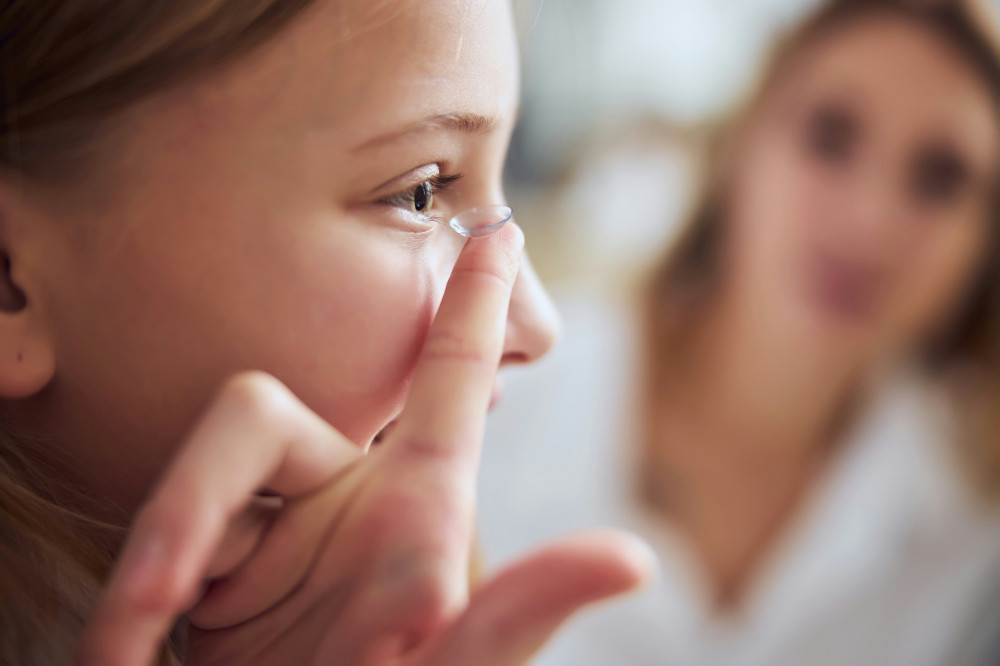
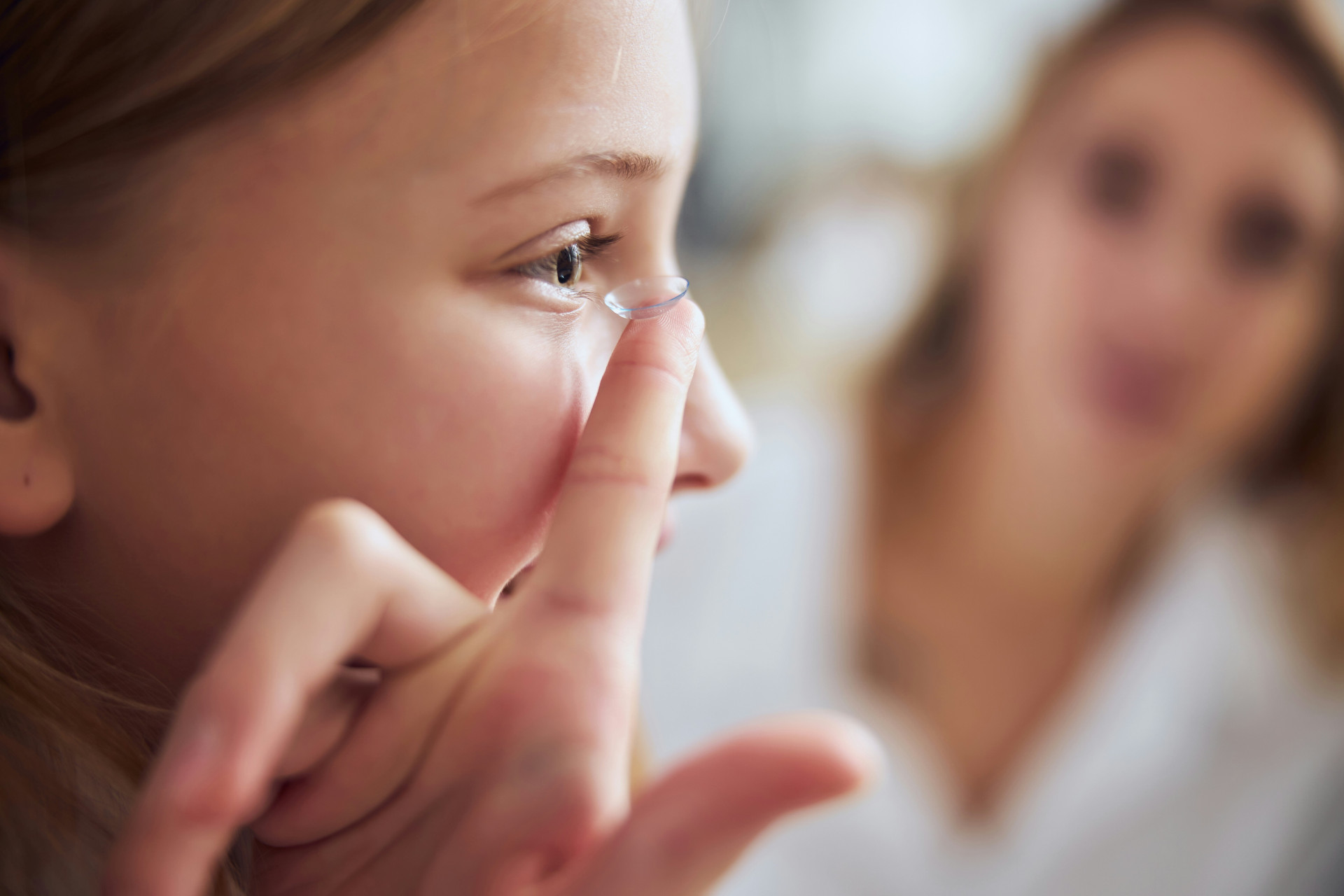
During puberty, the body grows quickly, and the eyes can change shape as well. This is why some teens develop nearsightedness during these years. Many young people get their first pair of glasses or contact lenses in middle or high school.
Eye care professionals recommend regular eye exams every one to two years during adolescence, especially if there’s a family history of vision problems. Detecting changes early helps ensure that teens have the right correction for schoolwork, sports, and daily life.
Screen Time and Eye Health – A Modern Challenge
Today’s children spend more time than ever on digital devices—computers, tablets, and phones—both in school and at home. Extended near work can strain the eyes and may increase the risk of developing nearsightedness. Research suggests that spending more time outdoors can help protect children’s vision.
A helpful guideline is the 20-20-2 rule: every 20 minutes of close-up work, look at something 20 feet away for at least 20 seconds—and aim for at least 2 hours of outdoor time each day. Natural light and distance viewing help the eyes stay flexible and healthy.
When to Have Your Child’s Eyes Checked
Even if schools provide basic vision screenings, a comprehensive eye exam by an optometrist or ophthalmologist is important if you notice any concerns. You should schedule an eye exam if your child:
- Complains of headaches or tired eyes.
- Sits very close to the TV or holds books close to the face.
- Squints or tilts the head to see clearly.
- Has trouble concentrating while reading.
- Mentions double or blurry vision.
The earlier a vision problem is detected, the easier it is to correct—and in some cases, early treatment can prevent long-term issues.
Læs også:


From Childhood to Adulthood – A Vision That Keeps Changing
Most children who need glasses will continue to wear them for years, though their prescriptions may change. Some outgrow their vision problems, while others may need stronger lenses over time. The key is regular monitoring and professional eye care.
Good vision is essential for learning, confidence, and overall well-being. By making eye health a routine part of your child’s care, you help ensure that they see the world clearly—today and in the years to come.
Læs også: